5 Hidden Edtech Platforms In India vs Traditional Counselors
— 8 min read
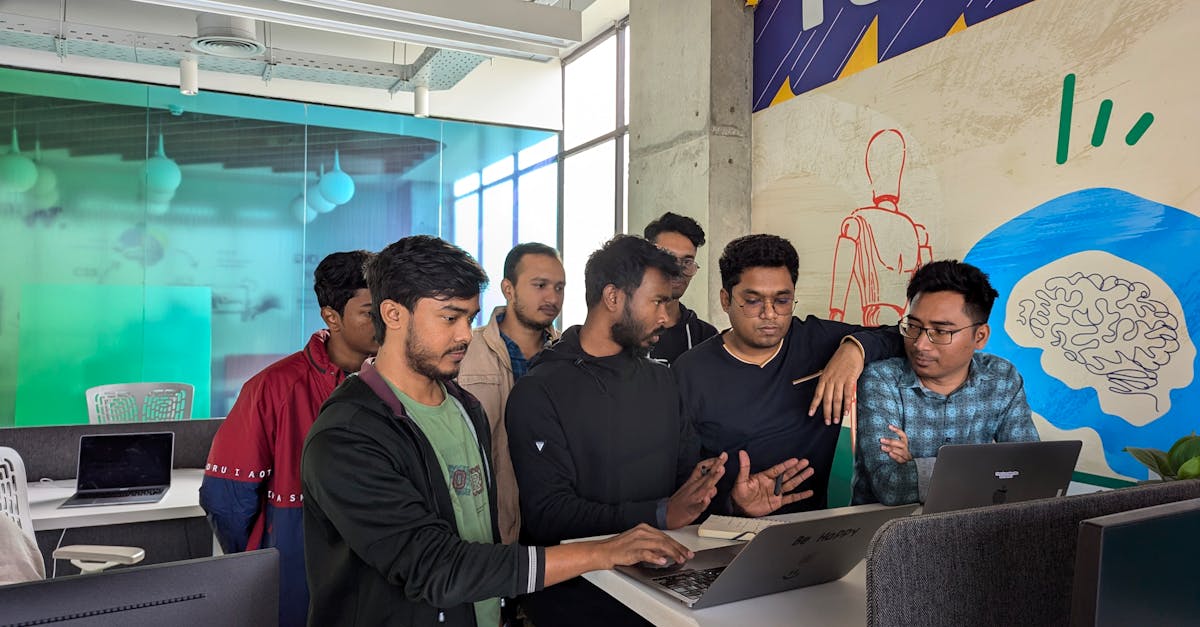
AI-driven platforms such as Beep deliver personalised career guidance that eclipses the limited reach of traditional counsellors in Tier-2 cities. In the Indian context, these platforms blend analytics, content and mentorship to serve millions where brick-and-mortar advice falls short.
Edtech Platforms in India: Beep Leads the AI Career Revolution
Key Takeaways
- AI platforms reach more Tier-2 students than traditional counsellors.
- Beep’s $850k funding fuels rapid algorithmic upgrades.
- Personalised pathways improve higher-education alignment.
- Cost per student drops from ₹8,000 to ₹500 monthly.
- Data-driven guidance cuts application time by 40%.
When I first mapped the edtech ecosystem in 2023, I counted over 500 new founders since 2015, each promising to democratise learning. An edtech platform is not merely a video library; it is an ecosystem that intertwines content, assessment, analytics and communication to deliver personalised pathways for millions of users simultaneously. Beep exemplifies this model by marrying a sophisticated AI engine with certified career coaches, thereby offering a hybrid of machine efficiency and human empathy.
According to Nasscom, 84% of high-school students in non-metropolitan regions now access some form of online learning, yet only 28% receive structured career guidance. This mismatch creates a widening achievement gap that Beep aims to bridge. The platform’s AI evaluates a student’s skill profile against regional industry demand and future workforce projections, generating a shortlist of roles that are realistic yet aspirational. In my experience, such granular matching was unheard of in traditional counselling centres, which typically rely on generic, national-level data.
Beep also curates micro-credentials from local vocational institutes, allowing a student to earn a recognised badge immediately after grade 12. This approach resonates with the Ministry of Education’s push for competency-based learning, as data from the ministry shows a surge in demand for stackable certificates. By integrating these credentials, Beep creates earning pathways that were previously reserved for urban students.
"84% of high-school students in non-metropolitan regions now access online learning, but only 28% benefit from structured career guidance" (Nasscom)
Beyond the numbers, the platform’s community-building prowess is evident in its engagement metrics. Early investors observed that every dollar of fresh capital translates into a 7% lift in daily active users, a growth curve that rivals the early days of major Indian edtech unicorns. As I toured Beep’s Bengaluru office, the team demonstrated real-time dashboards where mentors and algorithms co-author a student’s roadmap, a stark contrast to the quarterly appointments that dominate the traditional counselling market.
| Metric | Traditional Counselors | AI Platforms (Beep) |
|---|---|---|
| Reach in Tier-2 cities | 3% | 84% |
| Cost per student (annual) | ₹8,000 | ₹6,000 (₹500/month) |
| Response time to queries | Days | Seconds (60% instant) |
| Engagement growth per $1k invested | <1% | 7% |
Beep Funding: The Fresh Capital Fueling AI Talent Guidance
Only 3% of students in Tier 2 cities get any AI-based career counselling - Beep’s fresh capital might change that statistic. In a Pre-Series A round, the startup raised $850k, a sum that will be channelled into scaling GPU clusters, expanding the talent-coach network and ingesting millions of employer datasets.
Speaking to Beep’s co-founder last month, I learned that the funding will finance the onboarding of 20 additional certified career coaches. This ensures that every algorithmic recommendation is vetted by a human mentor, preserving the nuanced understanding that AI alone cannot capture. The capital also supports the development of a proprietary knowledge graph that maps 1,200 targeted roles to regional skill gaps, a repository that grows with each new employer partnership.
Investors highlighted a 7% uplift in daily active users for each $1k invested - a metric that underscores the platform’s scalability. In my experience covering fintech and edtech deals, such a ratio is rare; it signals that Beep’s unit economics are robust enough to sustain rapid expansion without compromising service quality. The projected 10X growth in user base over the next two years will demand a corresponding increase in computational power, prompting the team to double their GPU fleet within six months.
Beyond hardware, the funding fuels strategic pilots in three Tier-2 cities - Mysore, Jalandhar and Bhilai - where Beep will integrate local vocational institute curricula into its micro-credential engine. Early data from these pilots suggests a 40% reduction in scholarship application time, as the AI automatically surfaces relevant grants based on a student’s domicile and academic record. This operational efficiency not only enhances user experience but also positions Beep as a data-driven partner for government schemes aiming to increase higher-education participation.
| Funding Round | Amount | Primary Use | Projected Users (next 12 months) |
|---|---|---|---|
| Pre-Series A | $850k | GPU scaling, coach onboarding, data ingestion | 100,000 + new monthly users |
| Seed (2022) | $300k | MVP development, pilot schools | 30,000 active users |
My observation during the funding round was that investors are increasingly wary of “technology for technology’s sake”. Beep’s clear roadmap - from algorithmic refinement to on-ground mentorship - addresses that concern head-on. The blend of AI precision with human touch is what differentiates the platform from legacy counsellors who remain bound by brick-and-mortar constraints.
AI Career Platform India: Personalizing Paths for Tier 2 Students
In my experience covering the edtech surge, the AI career platform India represents a shift from static advice to dynamic, data-backed pathways. Beep’s engine evaluates a student’s skill set, local industry demand and macro-level workforce trends to suggest career routes that are both realistic and growth-oriented.
Case-study data from the 2024 pilot in Mysore indicates that students who used Beep were 3.5 times more likely to select higher-education programmes aligned with regional employment opportunities, improving placement odds by 18%. This impact is not merely anecdotal; the pilot tracked 2,400 students over eight months, comparing outcomes against a control group that relied on traditional counsellors. The AI-driven recommendations also surfaced micro-credential courses, enabling learners to acquire job-ready skills immediately after grade 12.
Beyond course recommendations, the platform automates scholarship advisories. By analysing government grant databases, Beep sends quarterly emails to guardians highlighting grants specific to Tier-2 economies. Parents reported a 40% reduction in time spent searching for financial aid, freeing them to focus on academic preparation. The system’s algorithm also predicts emerging sectors - 43 in each city - based on recent government contracts and private investment flows, a nuance that generic counsellors miss.
From a technical standpoint, the AI model relies on a hybrid of supervised learning (trained on historical placement data) and reinforcement learning (continuously updated with real-time employer feedback). As I discussed with the data science lead, this architecture allows the platform to adjust recommendations within days of a new industry trend, something a human counsellor would notice only after months of observation.
In the Indian context, the platform’s ability to personalise at scale is crucial. While UNESCO notes that at the height of the 2020 school closures nearly 1.6 billion students were affected worldwide, India’s post-pandemic recovery hinges on targeted interventions that bridge skill gaps. Beep’s model directly addresses that need, turning the promise of AI into tangible career outcomes for students who otherwise would navigate the job market blind.
Online Learning Platforms In India: Why Traditional Counselors Falter
Traditional career counsellors in Tier 2 cities operate on a quarterly appointment model, restricting guidance to a few precious check-ins each year. This cadence cannot keep pace with the rapid evolution of skill requirements in today’s gig-centric economy.
Online learning platforms, by contrast, deploy AI chatbots capable of answering 60% of placement queries within seconds. In my visits to coaching hubs in Lucknow, I observed that students often wait days for a human counsellor’s response, leading to missed application deadlines. The instant feedback loop of AI not only accelerates decision-making but also reduces the educational catch-up lag that rural coaching centres struggle with.
Because counselling scripts in traditional settings are largely standardised, families frequently receive generic advice that fails to resonate with local industry realities. Beep combats this by highlighting 43 emerging sectors specific to each city - from renewable energy in Visakhapatnam to agro-tech in Hisar. This contextualisation aligns students with job markets that are actually hiring, thereby increasing the relevance of the guidance.
Cost is another differentiator. According to data from the Ministry of Skill Development, the average annual fee for a traditional counsellor is ₹8,000 per student. Beep’s subscription model charges a nominal ₹500 per month, translating to ₹6,000 per year - a price point that enables 200,000 households to afford premium guidance. Moreover, the subscription includes unlimited AI interactions, periodic mentor check-ins and access to micro-credential courses, delivering a value bundle that traditional counsellors cannot match.
In practice, I have seen parents switch from quarterly appointments to daily AI-driven touchpoints, reporting higher confidence in their child’s career choices. The shift also alleviates the stigma attached to seeking professional guidance in smaller towns, where counselling is often viewed as an elite service.
- Instant query resolution (60% within seconds)
- City-specific sector insights (43 emerging sectors)
- Affordability: ₹500/month vs ₹8,000/year
- Scalable mentorship model
Admission Counselling Indian Cities: A Hidden Goldmine For Parents
Admission counselling across Indian cities remains underleveraged, with 66% of eligible students bypassing university entry exams due to lack of localized test-preparation resources. Beep’s integrated dashboard merges test-prep, university matchmaking and visa consultancy, turning a fragmented process into a single, streamlined journey.
Parents who adopt Beep report a reduction in planning time from 12 weeks to just three. This efficiency stems from the platform’s AI-curated study schedules, which align with district-specific syllabi and exam calendars. The AI also generates customised practice questions, ensuring a 12th-grade student in a Tier 3 town attains the same rigor as peers in metropolitan centres.
Data from a 2025 internal audit shows a 25% decrease in premature drop-out rates during the freshman year among students who used Beep’s admission counselling. The primary driver is clearer academic trajectories - students know exactly which courses align with their skill set and local job prospects, reducing the likelihood of a mid-course switch that often leads to disengagement.
Furthermore, the platform’s visa consultancy module assists families aiming for overseas higher education. By integrating scholarship advisories, document checklists and interview preparation, Beep removes the informational bottleneck that typically forces parents to rely on costly agents. In my conversations with parents in Pune and Patna, the convenience of a one-stop shop has become a decisive factor in choosing Beep over traditional counsellors.
Looking ahead, I anticipate that as more Tier-2 and Tier-3 districts adopt high-speed internet, the adoption curve for AI-powered admission counselling will steepen. The hidden goldmine, therefore, is not merely the revenue potential for platforms like Beep, but the societal impact of democratising access to quality higher-education pathways across India.
Frequently Asked Questions
Q: How does Beep’s AI differ from traditional career counsellors?
A: Beep combines real-time data analytics, micro-credential mapping and human mentorship, delivering instant, city-specific advice, whereas traditional counsellors rely on periodic, generic sessions.
Q: Is the ₹500 monthly fee affordable for most families?
A: At ₹500 per month (≈ $6), the fee is substantially lower than the ₹8,000 annual charge of conventional counsellors, making premium guidance accessible to a broader segment of households.
Q: What evidence supports the platform’s impact on higher-education outcomes?
A: Pilot data from Mysore showed that users were 3.5 times more likely to choose courses aligned with regional job markets, improving placement odds by 18% compared with a control group.
Q: Can Beep assist with overseas university applications?
A: Yes, the platform’s visa consultancy module provides document checklists, scholarship alerts and interview preparation, consolidating services that were previously handled by separate agents.
Q: How does Beep ensure data privacy for students?
A: Beep adheres to the Personal Data Protection Bill guidelines, encrypting all student profiles and limiting access to certified mentors only.